> For the complete documentation index, see [llms.txt](https://docs.veza.com/4yItIzMvkpAvMVFAamTf/llms.txt). Markdown versions of documentation pages are available by appending `.md` to page URLs; this page is available as [Markdown](https://docs.veza.com/4yItIzMvkpAvMVFAamTf/product-updates/blog/integrations-v2.md).
# UX Update: Veza Integrations
Introducing a revised and simplified workflow for adding and managing Veza integrations.
We're excited to share some upcoming improvements to Veza Integrations, with a fully overhauled user interface for integration management soon to be released for all customers. While fundamental concepts are the same, the steps to set up an integration are streamlined and simplified. We've also modernized and updated many aspects of the experience, aimed to improve the first interactions that many users have with the Veza platform.
Highlights of the changes include:
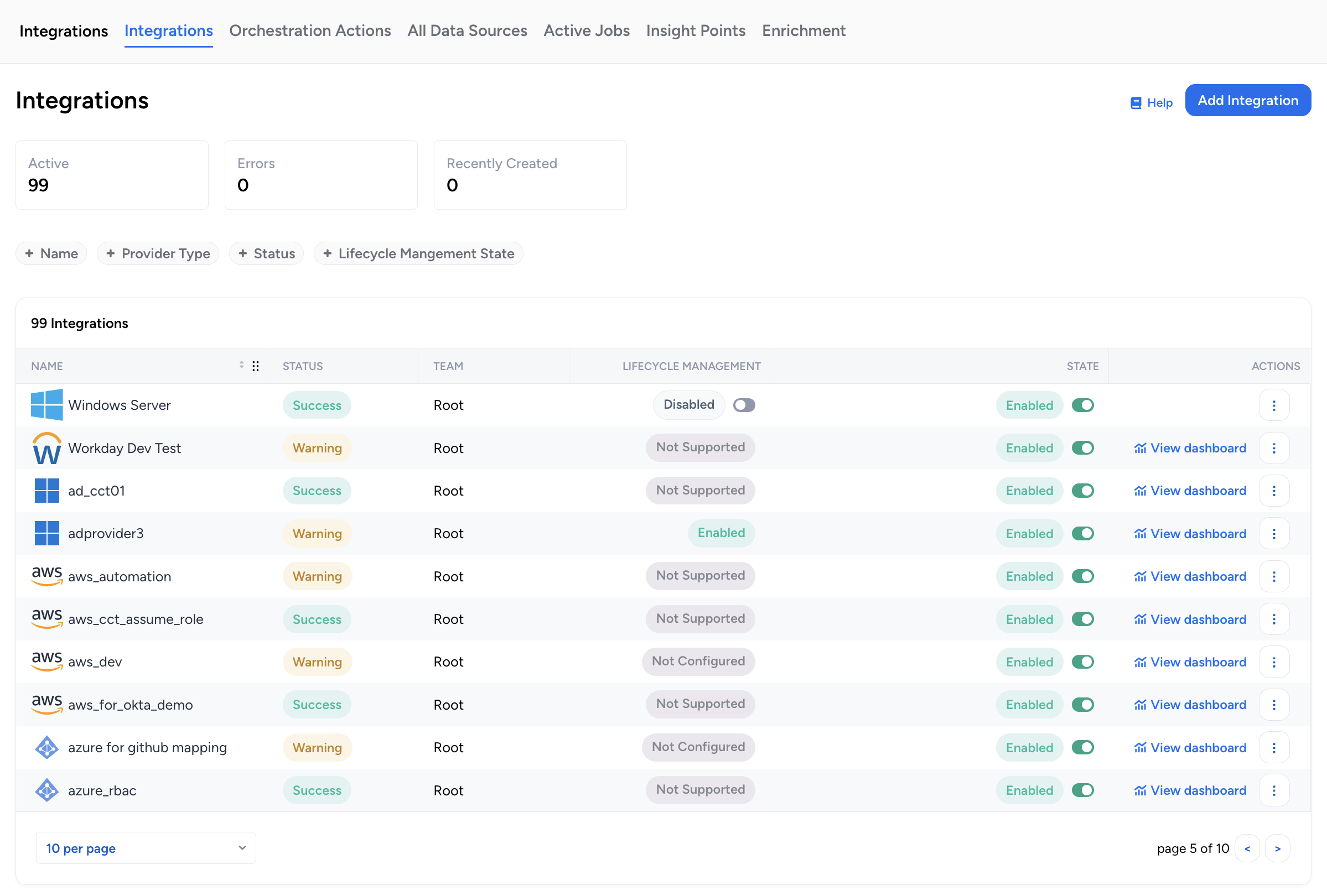
* **New table view** for managing existing integrations
* **Enhanced search capabilities** and **quick filter cards** for the Integrations list
* **“View Dashboard” quick links** for each integration type
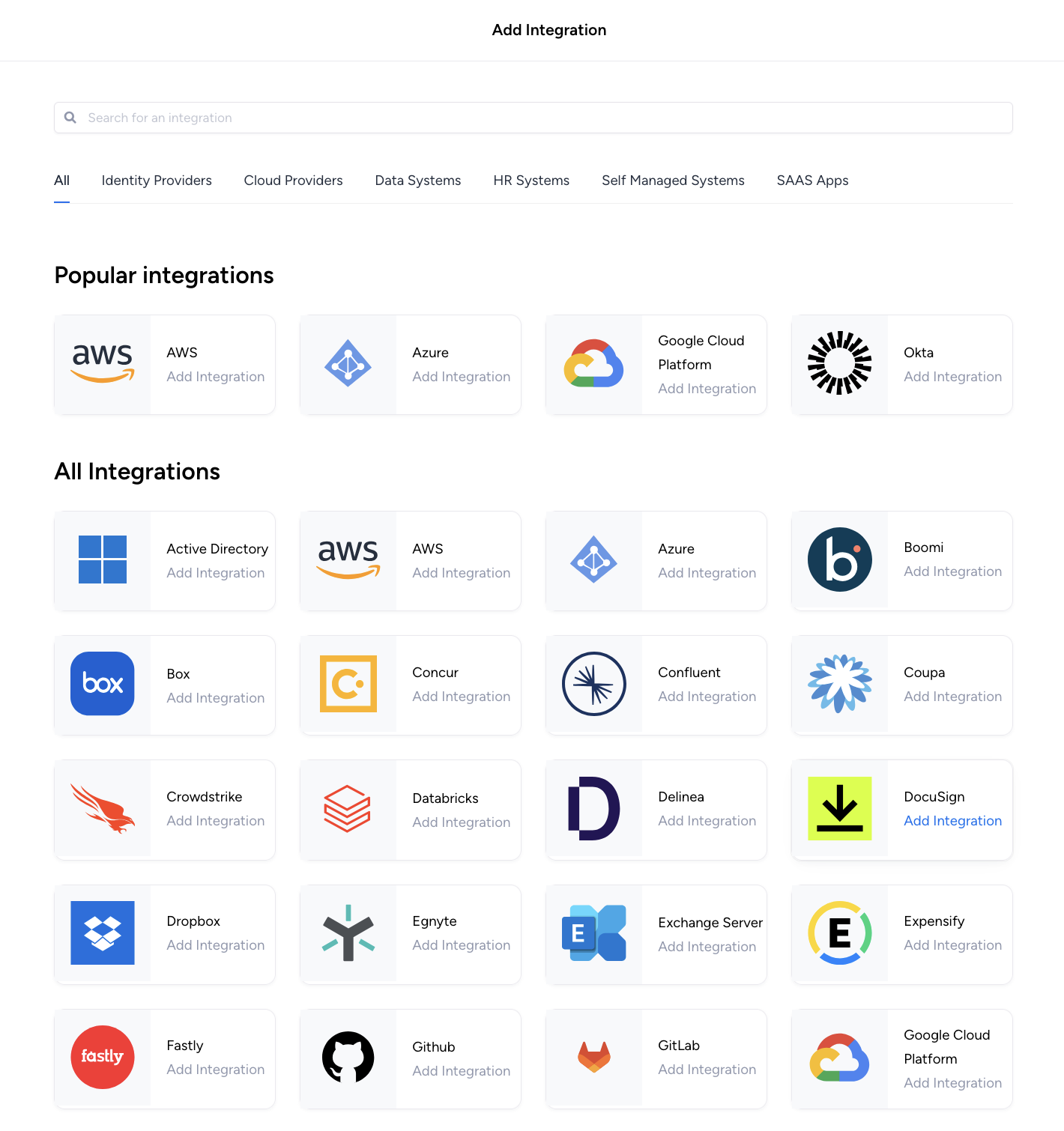
* **New catalog view** with categories to help admins find integrations quickly
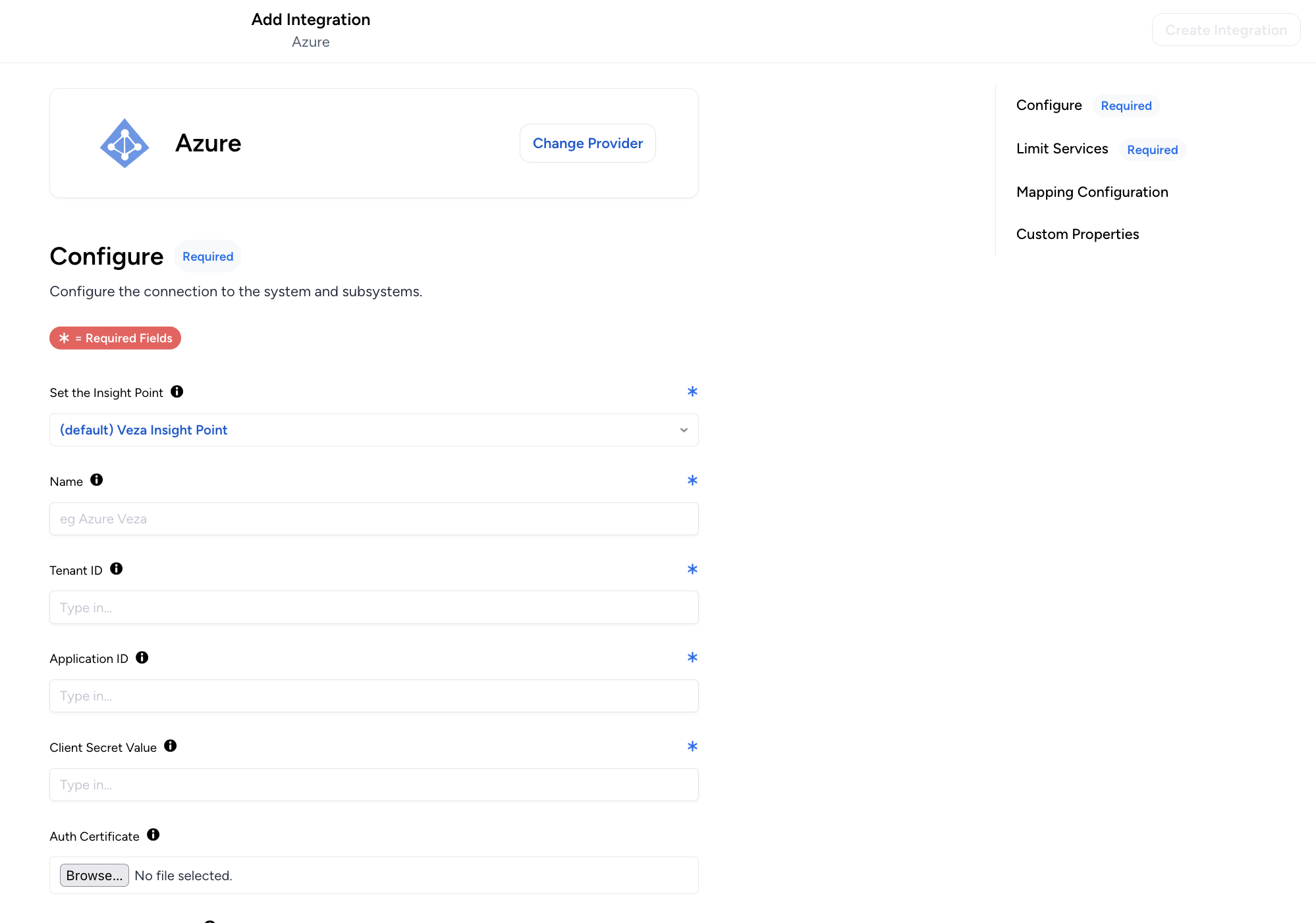
* **Full-screen layout** for configuring specific integrations
* New **Integration details** view
We hope you enjoy the latest changes and would appreciate your input and questions. Please reach out to the Veza support team with your feedback, and thank you for your ongoing partnership.
### New "Add Integration" flow
We've significantly improved the overall flow for adding new integrations. Basic concepts are unchanged, but the steps to set up an integration are streamlined and use a modern UX. We've also grouped integrations to make them easier to locate.
Adding an integration now involves fewer clicks overall, with a new overview page showing all the integrations that can be enabled on Veza. You can choose from integrations by type, choose a popular integration, or quickly search for the integration you're looking for.
### Streamlined integration configuration
You can now configure integrations from a single page, with no switching between tabs. Required fields and hints are provided for easier configuration. A single-page workflow is now available for choosing individual services to discover, adding custom mapping configurations, and defining any optional properties to extract:
### Enhanced overviews and details
It's now easier to get a full overview of all integrations, or zero in on the most important ones. You can use new controls to filter the list of added integrations by name, type, or status with improved dropdown menus:
Some of the options on this page are reorganized to make common actions more accessible, with more choices available under the **Actions** dropdown. Clicking **View Dashboard** now opens the integration on the analytics page for more details about the discovered entities.
---
# Agent Instructions
This documentation is published with GitBook. GitBook is the documentation platform designed so that both humans and AI agents can read, navigate, and reason over technical content effectively. Learn more at gitbook.com.
## Querying This Documentation
If you need additional information that is not directly available in this page, you can query the documentation dynamically by asking a question.
Perform an HTTP GET request on the current page URL with the `ask` query parameter, and the optional `goal` query parameter:
```
GET https://docs.veza.com/4yItIzMvkpAvMVFAamTf/product-updates/blog/integrations-v2.md?ask=&goal=
```
`ask` is the immediate question: it should be specific, self-contained, and written in natural language.
`goal` is optional and describes the broader end goal you are ultimately trying to accomplish on behalf of the user. GitBook uses it to tailor the answer towards what is most useful for that goal.
The response will contain a direct answer to the question and relevant excerpts and sources from the documentation.
Use this mechanism when the answer is not explicitly present in the current page, you need clarification or additional context, or you want to retrieve related documentation sections.